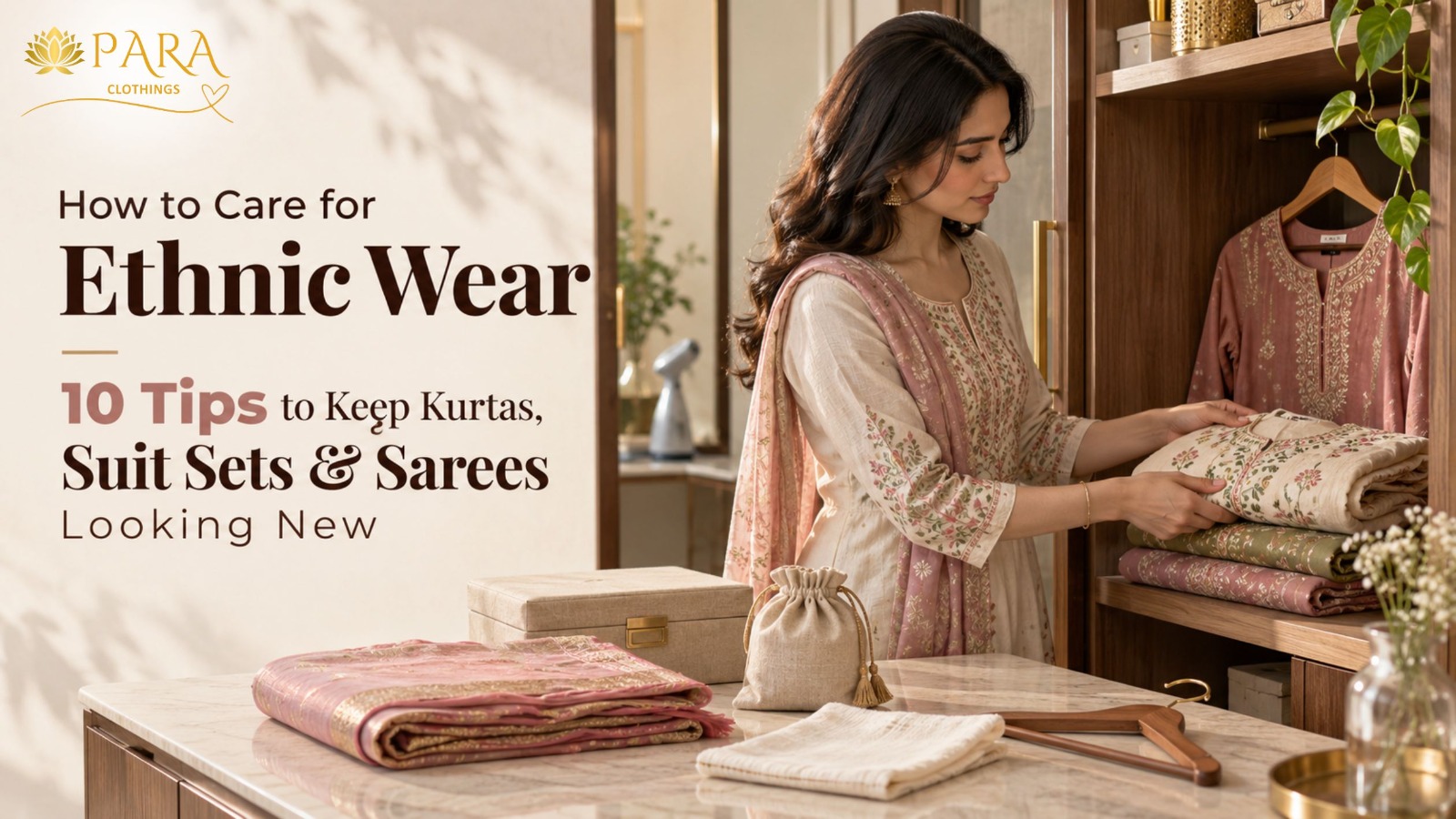

How to Care for Ethnic Wear: 10 Tips to Keep Kurtas, Suit Sets & Sarees Looking New
How to care for ethnic wear is one of the most useful wardrobe skills you can learn if you regularly wear kurtas, suit sets, sarees or coordinated ethnic outfits. The right care routine can help colours stay fresher, silhouettes hold their shape and delicate details remain neater for longer. Just as importantly, it can prevent small mistakes—such as using too much heat, storing clothes while damp or treating every fabric the same—from shortening the life of a garment.
The first rule is simple: always follow the care instructions on the individual garment label. Ethnic wear can combine different fibres, dyes, linings, embellishments, trims and finishes, so a method that works for one kurta may not be right for another. International care-labelling guidance from GINETEX explains that care symbols communicate the maximum permitted treatment for washing, bleaching, drying, ironing and professional care. India also has a Bureau of Indian Standards care-labelling code for textiles. GINETEX care-labelling guidance | BIS textile care-labelling standard information
For shoppers building an ethnic wardrobe, PARA Clothings currently carries a broad mix of kurtas, suit sets, co-ords and sarees, making garment care relevant across both everyday and occasion dressing. Explore PARA Clothings
Why Ethnic Wear Needs a More Thoughtful Care Routine
Ethnic wear often combines several design elements in one garment: dyed or printed fabric, contrast piping, embroidery, decorative buttons, lining, dupattas, structured necklines or coordinated bottoms. That means “wash everything the same way” is rarely the best approach.
A better routine starts before the first wash. Read the label, understand the fabric and finish, separate colours intelligently and use the gentlest effective care method. This is especially important for pieces you want to rewear across workdays, festive gatherings, family functions and travel.
10 Practical Tips on How to Care for Ethnic Wear
1. Read the care label before the first wash
Before washing a new kurta, suit set or saree, check the garment-specific care instructions. The label should guide decisions around washing method, maximum temperature, bleaching, drying, ironing and professional cleaning. Do not assume that two visually similar garments need identical treatment. Fabric composition, dyes, trims and finishes can change what is safe.
2. Separate colours before washing
Dark, bright and deeply dyed garments should generally be kept separate from whites and very light colours unless the label or manufacturer indicates otherwise. New garments can sometimes release excess dye during early washes. Separating loads also reduces the risk of dulling pale fabrics or transferring colour onto contrast panels, dupattas and bottoms.
3. Choose the gentlest effective wash method
If the care label permits domestic washing, avoid using more mechanical action than necessary. A gentle cycle or careful hand wash may be more appropriate for delicate constructions than a vigorous machine cycle. Fast spinning, twisting and aggressive rubbing can stress seams, embellishment, necklines and lightweight fabrics.
4. Use a mild detergent—and do not overuse it
More detergent does not automatically mean cleaner clothes. Excess detergent can be difficult to rinse out and may leave residue on fabrics. Use a suitable mild detergent in the amount recommended for the wash method, water conditions and load size. For delicate, embroidered or embellished garments, follow the garment label first.
5. Treat stains quickly, but never scrub blindly
A small food or makeup stain is easier to manage when addressed early, but aggressive scrubbing can spread pigment, roughen the surface or damage embroidery. Blot excess moisture, identify the stained area and use a method compatible with the garment’s care instructions. When the fabric or embellishment is particularly delicate, professional cleaning may be the safer option.
6. Dry with shape and colour in mind
Drying is part of garment care—not an afterthought. Reshape garments gently after washing and avoid stretching heavy wet fabric on unsuitable hangers. When the care label permits air drying, choose a clean, well-ventilated area. Direct intense sunlight can be harsh on some colours and finishes, so the label and fabric type should guide where and how the garment is dried.
7. Iron from the safer side of the fabric
Heat can flatten texture, create shine or damage embellishment when it is too high. Always follow the permitted ironing level on the care label. For decorative areas, prints or embroidery, turning the garment inside out or using a clean pressing cloth can add a layer of protection when appropriate. Never guess a high temperature simply because the garment looks creased.
8. Store kurtas and suit sets according to their structure
Lightweight kurtas can often be folded or hung depending on the fabric and construction, while heavier garments may stretch if left on thin hangers for long periods. Use broad, smooth hangers for pieces that benefit from hanging. Keep coordinated bottoms and dupattas together so sets remain easy to find and you avoid unnecessary handling each time you dress.
9. Store sarees clean, dry and without harsh creases
Sarees should go into storage completely dry and clean. Fold them neatly and avoid crushing decorative borders or embellishment under heavy stacks. For sarees that are stored for long periods, occasional refolding can help prevent one crease line from remaining under continuous pressure. The exact method should still reflect the saree’s fabric and finishing.
10. Give occasion wear a post-wear check before putting it away
Do not return a festive suit set or saree straight to long-term storage after an event. Check the neckline, underarm area, cuffs, hem and any areas exposed to food, makeup or perfume. Air the garment if appropriate, deal with stains according to its care instructions and make sure it is fully dry before storage. A two-minute check can prevent a small mark from becoming a permanent surprise months later.
A Simple Care Routine for Different Ethnic-Wear Categories
| Category | Before washing | After washing | Storage focus |
| Kurta | Check fabric, dye, print and trims | Reshape gently; iron only as permitted | Avoid overcrowding; use suitable fold/hanger |
| Suit set | Check each component, not only the kurta | Keep kurta, bottom and dupatta together | Prevent heavy pieces from stretching lighter ones |
| Saree | Identify fabric, border and embellishment needs | Dry fully before folding | Protect border/embellishment; refold periodically |
| Co-ord set | Check top and bottom care instructions | Wash consistently if label permits | Store pieces together to prevent mismatch/loss |
5 Common Ethnic-Wear Care Mistakes to Avoid
- Ignoring the label because a garment “looks washable.”
- Using the hottest iron setting to remove creases faster.
- Storing a garment before it is completely dry.
- Leaving heavy garments on thin hangers for long periods.
- Assuming embroidery, prints, contrast panels and plain fabric can all be treated exactly the same way.
How Better Care Makes Rewearing Easier
Good garment care and smart styling support the same goal: getting more satisfying wear from the pieces you already own. A kurta that keeps its shape and colour is easier to restyle for work, brunch or a family gathering. A suit set that is stored neatly is easier to split into separates. A saree that is folded and protected carefully is more likely to feel occasion-ready when you reach for it again.
If you want styling ideas after your wardrobe is cared for, read PARA’s guide: How to Mix and Match Ethnic Wear: 9 Smart Ways to Rewear Kurtas, Co-ords & Suit Sets
Shopping With Care in Mind
Care begins at the buying stage. Before purchasing, think beyond colour and silhouette. Ask whether the garment suits your real routine: how often you expect to wear it, whether its care requirements fit your lifestyle, whether you are comfortable maintaining its trims or embellishment and whether it can earn repeat wear.
PARA’s current assortment includes everyday and occasion-ready pieces across multiple ethnic-wear categories. Browse New Arrivals, Suit Sets and the wider PARA collection to choose pieces that fit both your style and your care routine.
Frequently Asked Questions
How often should ethnic wear be washed?
Wash frequency depends on how long the garment was worn, contact with perspiration, stains, fabric type and the garment’s specific care instructions. Not every piece needs the same routine after every wear.
Can I machine-wash kurtas?
Only when the garment’s care instructions permit machine washing. Some kurtas may tolerate a gentle cycle, while others require hand washing or professional care because of fabric, dye, embellishment or construction.
How should I care for embroidered ethnic wear?
Start with the garment label. Avoid aggressive rubbing, twisting and high heat around embroidery. For delicate or heavily embellished pieces, professional cleaning may be appropriate.
How do I stop ethnic wear from fading?
Follow the care label, separate colours appropriately, avoid unnecessarily harsh washing and excessive heat, and store garments away from prolonged harsh light. Dye and fabric behaviour varies by garment.
What is the best way to store ethnic wear?
Store garments clean and fully dry. Choose folding or hanging based on weight, structure and fabric. Avoid overcrowding and protect embellishment, borders and delicate surfaces from unnecessary pressure.
Can I use the same care routine for a kurta, suit set and saree?
Not automatically. Even pieces from the same wardrobe can use different fabrics, dyes and finishes. The garment-specific care label should take priority over general advice.
Final Takeaway
Learning how to care for ethnic wear is less about complicated laundry rules and more about paying attention to the garment in front of you. Read the label. Use the gentlest suitable treatment. Respect fabric, colour and embellishment. Dry and iron thoughtfully. Store pieces clean, dry and without unnecessary strain.
When clothing is cared for well, the wardrobe becomes easier to wear, easier to restyle and easier to enjoy repeatedly. That is especially valuable for ethnic wear, where one well-kept kurta, suit set or saree can move through many different moments of your life.