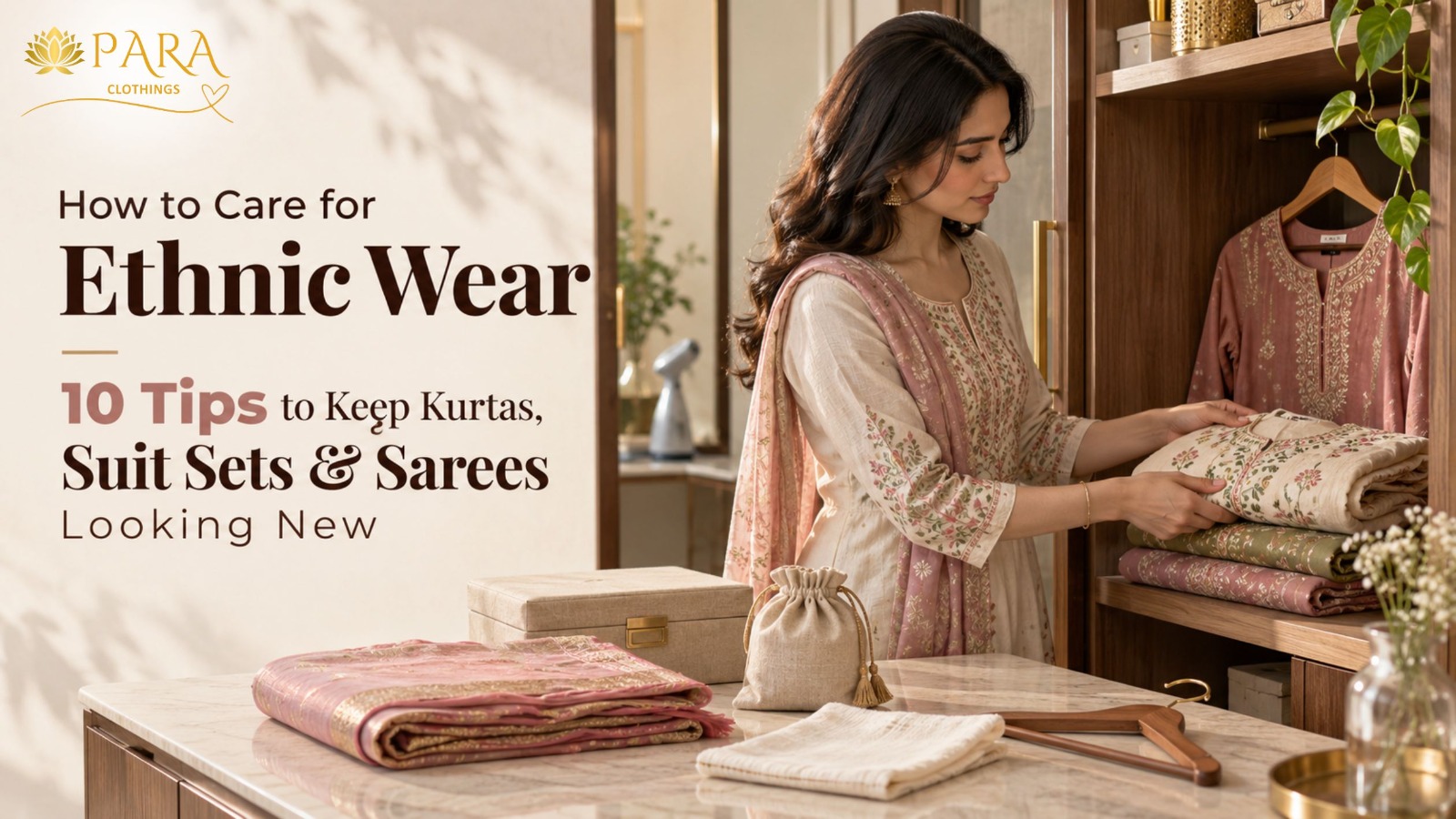
How to care for ethnic wear including kurtas, suit sets, and sarees to keep them looking new
October 3, 2026

How to Care for Ethnic Wear: 10 Tips to Keep Kurtas, Suit Sets & Sarees Looking New

How to care for ethnic wear is one of the most useful wardrobe skills you can learn if you regularly wear kurtas, suit sets, sarees or coordinated ethnic outfits. The right care routine can help colours stay fresher, silhouettes hold their shape and delicate details remain neater for longer. Just as importantly, it can prevent small mistakes—such as using too much heat, storing clothes while damp or treating every fabric the same—from shortening the life of a garment.

The first rule is simple: always follow the care instructions on the individual garment label. Ethnic wear can combine different fibres, dyes, linings, embellishments, trims and finishes, so a method that works for one kurta may not be right for another. International care-labelling guidance from GINETEX explains that care symbols communicate the maximum permitted treatment for washing, bleaching, drying, ironing and professional care. India also has a Bureau of Indian Standards care-labelling code for textiles. GINETEX care-labelling guidance | BIS textile care-labelling standard information

For shoppers building an ethnic wardrobe, PARA Clothings currently carries a broad mix of kurtas, suit sets, co-ords and sarees, making garment care relevant across both everyday and occasion dressing. Explore PARA Clothings

Why Ethnic Wear Needs a More Thoughtful Care Routine

Ethnic wear often combines several design elements in one garment: dyed or printed fabric, contrast piping, embroidery, decorative buttons, lining, dupattas, structured necklines or coordinated bottoms. That means “wash everything the same way” is rarely the best approach.

A better routine starts before the first wash. Read the label, understand the fabric and finish, separate colours intelligently and use the gentlest effective care method. This is especially important for pieces you want to rewear across workdays, festive gatherings, family functions and travel.

10 Practical Tips on How to Care for Ethnic Wear

1. Read the care label before the first wash

Before washing a new kurta, suit set or saree, check the garment-specific care instructions. The label should guide decisions around washing method, maximum temperature, bleaching, drying, ironing and professional cleaning. Do not assume that two visually similar garments need identical treatment. Fabric composition, dyes, trims and finishes can change what is safe.

2. Separate colours before washing

Dark, bright and deeply dyed garments should generally be kept separate from whites and very light colours unless the label or manufacturer indicates otherwise. New garments can sometimes release excess dye during early washes. Separating loads also reduces the risk of dulling pale fabrics or transferring colour onto contrast panels, dupattas and bottoms.

3. Choose the gentlest effective wash method

If the care label permits domestic washing, avoid using more mechanical action than necessary. A gentle cycle or careful hand wash may be more appropriate for delicate constructions than a vigorous machine cycle. Fast spinning, twisting and aggressive rubbing can stress seams, embellishment, necklines and lightweight fabrics.

4. Use a mild detergent—and do not overuse it

More detergent does not automatically mean cleaner clothes. Excess detergent can be difficult to rinse out and may leave residue on fabrics. Use a suitable mild detergent in the amount recommended for the wash method, water conditions and load size. For delicate, embroidered or embellished garments, follow the garment label first.

5. Treat stains quickly, but never scrub blindly

A small food or makeup stain is easier to manage when addressed early, but aggressive scrubbing can spread pigment, roughen the surface or damage embroidery. Blot excess moisture, identify the stained area and use a method compatible with the garment’s care instructions. When the fabric or embellishment is particularly delicate, professional cleaning may be the safer option.

6. Dry with shape and colour in mind

Drying is part of garment care—not an afterthought. Reshape garments gently after washing and avoid stretching heavy wet fabric on unsuitable hangers. When the care label permits air drying, choose a clean, well-ventilated area. Direct intense sunlight can be harsh on some colours and finishes, so the label and fabric type should guide where and how the garment is dried.

7. Iron from the safer side of the fabric

Heat can flatten texture, create shine or damage embellishment when it is too high. Always follow the permitted ironing level on the care label. For decorative areas, prints or embroidery, turning the garment inside out or using a clean pressing cloth can add a layer of protection when appropriate. Never guess a high temperature simply because the garment looks creased.

8. Store kurtas and suit sets according to their structure

Lightweight kurtas can often be folded or hung depending on the fabric and construction, while heavier garments may stretch if left on thin hangers for long periods. Use broad, smooth hangers for pieces that benefit from hanging. Keep coordinated bottoms and dupattas together so sets remain easy to find and you avoid unnecessary handling each time you dress.

9. Store sarees clean, dry and without harsh creases

Sarees should go into storage completely dry and clean. Fold them neatly and avoid crushing decorative borders or embellishment under heavy stacks. For sarees that are stored for long periods, occasional refolding can help prevent one crease line from remaining under continuous pressure. The exact method should still reflect the saree’s fabric and finishing.

10. Give occasion wear a post-wear check before putting it away

Do not return a festive suit set or saree straight to long-term storage after an event. Check the neckline, underarm area, cuffs, hem and any areas exposed to food, makeup or perfume. Air the garment if appropriate, deal with stains according to its care instructions and make sure it is fully dry before storage. A two-minute check can prevent a small mark from becoming a permanent surprise months later.

A Simple Care Routine for Different Ethnic-Wear Categories

CategoryBefore washingAfter washingStorage focus
KurtaCheck fabric, dye, print and trimsReshape gently; iron only as permittedAvoid overcrowding; use suitable fold/hanger
Suit setCheck each component, not only the kurtaKeep kurta, bottom and dupatta togetherPrevent heavy pieces from stretching lighter ones
SareeIdentify fabric, border and embellishment needsDry fully before foldingProtect border/embellishment; refold periodically
Co-ord setCheck top and bottom care instructionsWash consistently if label permitsStore pieces together to prevent mismatch/loss

5 Common Ethnic-Wear Care Mistakes to Avoid

  • Ignoring the label because a garment “looks washable.”
  • Using the hottest iron setting to remove creases faster.
  • Storing a garment before it is completely dry.
  • Leaving heavy garments on thin hangers for long periods.
  • Assuming embroidery, prints, contrast panels and plain fabric can all be treated exactly the same way.

How Better Care Makes Rewearing Easier

Good garment care and smart styling support the same goal: getting more satisfying wear from the pieces you already own. A kurta that keeps its shape and colour is easier to restyle for work, brunch or a family gathering. A suit set that is stored neatly is easier to split into separates. A saree that is folded and protected carefully is more likely to feel occasion-ready when you reach for it again.

If you want styling ideas after your wardrobe is cared for, read PARA’s guide: How to Mix and Match Ethnic Wear: 9 Smart Ways to Rewear Kurtas, Co-ords & Suit Sets

Shopping With Care in Mind

Care begins at the buying stage. Before purchasing, think beyond colour and silhouette. Ask whether the garment suits your real routine: how often you expect to wear it, whether its care requirements fit your lifestyle, whether you are comfortable maintaining its trims or embellishment and whether it can earn repeat wear.

PARA’s current assortment includes everyday and occasion-ready pieces across multiple ethnic-wear categories. Browse New Arrivals, Suit Sets and the wider PARA collection to choose pieces that fit both your style and your care routine.

Frequently Asked Questions

How often should ethnic wear be washed?

Wash frequency depends on how long the garment was worn, contact with perspiration, stains, fabric type and the garment’s specific care instructions. Not every piece needs the same routine after every wear.

Can I machine-wash kurtas?

Only when the garment’s care instructions permit machine washing. Some kurtas may tolerate a gentle cycle, while others require hand washing or professional care because of fabric, dye, embellishment or construction.

How should I care for embroidered ethnic wear?

Start with the garment label. Avoid aggressive rubbing, twisting and high heat around embroidery. For delicate or heavily embellished pieces, professional cleaning may be appropriate.

How do I stop ethnic wear from fading?

Follow the care label, separate colours appropriately, avoid unnecessarily harsh washing and excessive heat, and store garments away from prolonged harsh light. Dye and fabric behaviour varies by garment.

What is the best way to store ethnic wear?

Store garments clean and fully dry. Choose folding or hanging based on weight, structure and fabric. Avoid overcrowding and protect embellishment, borders and delicate surfaces from unnecessary pressure.

Can I use the same care routine for a kurta, suit set and saree?

Not automatically. Even pieces from the same wardrobe can use different fabrics, dyes and finishes. The garment-specific care label should take priority over general advice.

Final Takeaway

Learning how to care for ethnic wear is less about complicated laundry rules and more about paying attention to the garment in front of you. Read the label. Use the gentlest suitable treatment. Respect fabric, colour and embellishment. Dry and iron thoughtfully. Store pieces clean, dry and without unnecessary strain.

When clothing is cared for well, the wardrobe becomes easier to wear, easier to restyle and easier to enjoy repeatedly. That is especially valuable for ethnic wear, where one well-kept kurta, suit set or saree can move through many different moments of your life.
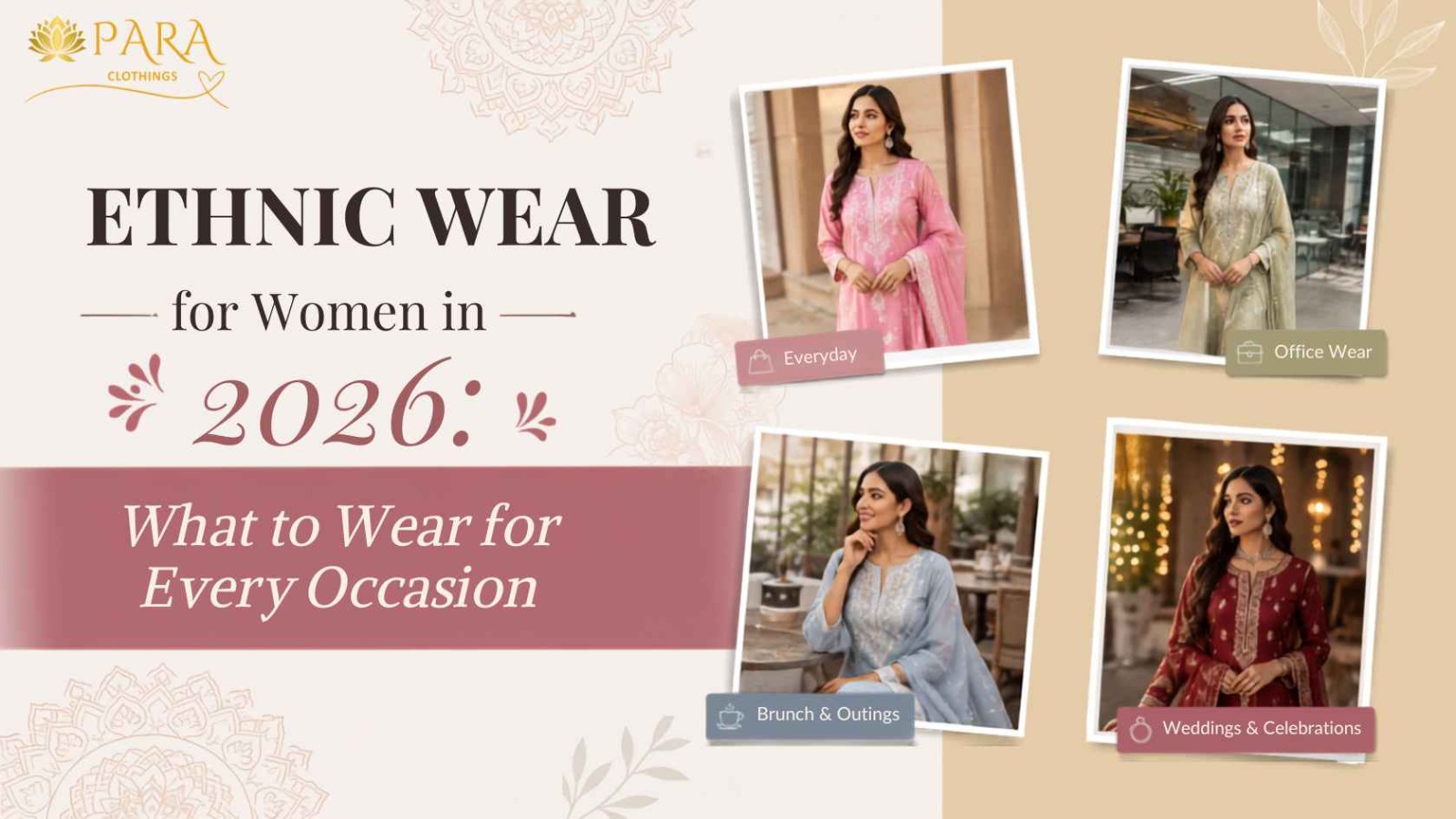
Ethnic wear for women in 2026 for everyday, office wear, brunch, weddings and celebrations
August 14, 2026

Ethnic Wear for Women in 2026: What to Wear for Every Occasion

Indian ethnic wear isn’t just for weddings and festivals anymore.

In 2026, ethnic wear for women is becoming an everyday wardrobe essential—from Monday morning meetings and coffee dates to family gatherings, festive celebrations and weekend getaways.

The best part? You don’t need a completely different wardrobe for every occasion.

A versatile kurta can become an office look. A co-ord can become your brunch outfit. A well-styled suit set can take you from a family gathering to an evening celebration.

The focus is shifting from simply following trends to choosing comfortable, versatile and repeat-worthy ethnic outfits. Current ethnic-fashion coverage also highlights co-ord sets, contemporary silhouettes and everyday versatility as important parts of the 2026 landscape. (Paraclothings)

So, what should you actually wear for different occasions?

Here’s your complete guide.

1. Everyday Ethnic Wear: Comfortable but Never Boring

Your everyday outfit should make getting dressed easy.

Whether you’re heading out for errands, meeting friends, shopping or simply want to look put-together, lightweight ethnic wear is an easy choice.

Try:
  • Printed kurtas
  • Everyday kurta sets
  • Lightweight ethnic outfits
  • Relaxed co-ord sets
  • Straight-cut kurtas
  • Minimal prints
For everyday Indian dressing, breathable fabrics and comfortable silhouettes are especially practical.
How to style it
Keep it simple:

Kurta + straight pants + flats + small earrings + handbag.

You don’t need ten accessories to make an outfit work.

PARA Pick
Elegant Everyday Ethnic Kurta for Women

A simple everyday kurta is one of those wardrobe pieces you can keep reaching for—exactly the kind of versatile ethnic wear that works beyond one occasion.

👉 Shop the Elegant Everyday Ethnic Kurta

Style tip: Add statement earrings and a different bottom to give the same kurta a completely new look.

2. Office Wear: Professional, Polished & Comfortable

Ethnic office wear doesn’t have to look overly traditional.

A clean kurta or sophisticated suit set can give you a polished Indian look while keeping you comfortable throughout the workday.

Best options:
  • Straight kurtas
  • Minimal kurta sets
  • Elegant suit sets
  • Subtle prints
  • Solid colours
  • Coordinated trousers
  • Lightweight fabrics

Try sophisticated shades such as ivory, beige, sage, blue, indigo or muted pink.

The formula

Kurta/Suit Set + Structured Bag + Minimal Jewellery + Flats

The result?

Professional without being boring.

PARA Pick

Aashritha Heritage Women’s Ethnic Suit Set

This is particularly suited to this section because PARA describes the Aashritha Heritage suit set as appropriate for office wear, festive celebrations, family gatherings and special occasions. (Paraclothings)

👉 Shop Aashritha Heritage Suit Set
Style tip: Pair it with a structured handbag and minimal jewellery for a sophisticated workwear look.

3. Brunch & Casual Outings: Effortless Is the Goal

Brunch has one unofficial fashion rule:

Look effortless, but definitely look good.

This is where contemporary ethnic fashion works beautifully.

Try:
  • Co-ord sets
  • Printed kurtas
  • Contemporary ethnic sets
  • Relaxed trousers
  • Indo-western combinations

Co-ord sets are especially useful because the outfit is already coordinated for you.

PARA Pick

Vyra Essence Women’s Co-Ord Set

PARA currently features the Vyra Essence Women’s Co-Ord Set in its collection. (Paraclothings)

👉 Shop the Vyra Essence Co-Ord Set

Style it with: sunglasses, minimal jewellery, sandals and a structured mini bag.

4. Family Gatherings & Pujas: Traditional With a Modern Touch

Family gatherings are the perfect opportunity to embrace Indian fashion without going overboard.

For a puja, family lunch or intimate celebration, look for an outfit that feels festive but remains comfortable.

Consider:
  • Elegant suit sets
  • Printed kurtas
  • Light embroidery
  • Traditional prints
  • Soft festive colours
  • Sarees
  • Coordinated ethnic sets

Colours such as yellow, pink, peach, green, ivory and powder blue work beautifully for daytime occasions.

PARA Pick

Aashritha Heritage Women’s Ethnic Suit Set

Its classic ethnic styling makes it a natural choice for family gatherings and special occasions, while PARA also positions it for office and festive wear. (Paraclothings)

👉 Shop Aashritha Heritage Suit Set

Style it with: jhumkas, a small bindi and traditional flats.

5. Festive Celebrations: Let Your Outfit Speak

Diwali. Raksha Bandhan. Navratri. Ganesh Chaturthi.

Festivals are your chance to bring colour, detail and personality into your wardrobe.

But festive doesn’t always mean heavily embellished.

Modern ethnic fashion is increasingly combining traditional inspiration with cleaner, contemporary silhouettes. (Paraclothings)

Try:
  • Statement suit sets
  • Festive sarees
  • Embroidered kurtas
  • Rich colours
  • Elegant dupattas
  • Contemporary ethnic sets
PARA Pick
Aurevia Royale Women’s Ethnic Suit Set

PARA describes Aurevia Royale as an elegant ethnic ensemble suitable for festive occasions, office wear, family gatherings and everyday styling. (Paraclothings)

👉 Shop Aurevia Royale Suit Set

Style tip: Let the outfit remain the hero. Add one statement accessory instead of overloading the look.

6. Wedding Guest Outfits: Dress for the Function

One wedding can mean five different dress codes.

Mehendi. Haldi. Sangeet. Wedding. Reception.

So instead of choosing one generic “wedding outfit”, dress according to the occasion.

For Mehendi

Think:
  • Bright colours
  • Floral prints
  • Lightweight outfits
  • Comfortable co-ords

For Haldi

Yellow is an obvious choice, but you can also experiment with:
  • Green
  • Orange
  • Pink
  • Floral prints

For Sangeet

Go slightly more glamorous with:
  • Dressier suit sets
  • Statement dupattas
  • Rich colours
  • Embellished details

For the Wedding or Reception

Choose:
  • Elegant sarees
  • Sophisticated suit sets
  • Dressier ethnic ensembles
PARA Pick

Ariyana Prestige Women’s Ethnic Suit Set

PARA positions this suit set for festive celebrations, office wear, family gatherings and graceful everyday styling, making it a versatile option for occasions where you want an elevated ethnic look without choosing something overly specific to one event. (Paraclothings)

👉 Shop Ariyana Prestige Suit Set

Style it with: statement earrings, elegant footwear and a small clutch.

Explore More Wedding-Ready Options

PARA currently has a dedicated Suit Set collection with 64 listed products, giving you plenty of options to explore for different wedding functions. (Paraclothings)

👉 Explore PARA Suit Sets

7. Dinner Dates & Evening Outings: Traditional, But Make It Modern

Ethnic wear can absolutely work for a dinner date.

The secret is styling.

Instead of going for an extremely traditional outfit, choose an elegant silhouette and modern accessories.

Try:

  • Contemporary suit sets
  • Statement kurtas
  • Elegant co-ords
  • Dressier ethnic sets

For evening dressing, deeper colours such as emerald, navy, burgundy, chocolate and black can create a sophisticated mood.

PARA Pick

Elanira Luxe Women’s Ethnic Suit Set

PARA describes Elanira Luxe as a contemporary ethnic piece created for refined celebrations and elevated everyday style. (Paraclothings)

👉 Shop Elanira Luxe Suit Set

Style it with: heels + statement earrings + a compact handbag.

8. Travel: Comfortable Enough for the Journey, Stylish Enough for the Photos

Travel outfits need to pass one important test:

Can I actually spend the whole day in this?

If not, it probably isn’t a great travel outfit.

Choose:
  • Lightweight fabrics
  • Relaxed silhouettes
  • Co-ord sets
  • Comfortable trousers
  • Easy-to-style kurtas
  • Versatile colours
PARA Pick

Nayelra Signature Women’s Co-Ord Set

PARA currently features the Nayelra Signature Women’s Co-Ord Set among its collection. (Paraclothings)

👉 Explore the Nayelra Signature Co-Ord Set

Style it with: comfortable footwear, sunglasses and a spacious tote.

Why co-ords work so well for travel

You can wear the set together or separate the pieces.

Top + trousers = Look 1

Top + jeans = Look 2

Trousers + basic top = Look 3

One set.

Multiple outfits.

Less overpacking.

9. College & Casual Days: Make Ethnic Wear Your Own

Ethnic wear doesn’t have to look traditional from head to toe.

For college, coffee runs and casual meet-ups, experiment with the styling.

Try:

Kurta + jeans + sneakers

or

Ethnic top + wide-leg trousers

or

Co-ord set + minimal accessories

The goal isn’t to follow a particular ethnic-wear formula.

It’s to make Indian fashion feel like your fashion.

PARA Pick

Aarvika Grace Women’s Elegant Ethnic Kurta

PARA currently features Aarvika Grace among its new/current products. (Paraclothings)

👉 Explore Aarvika Grace Kurta

Style tip: Pair your kurta with straight pants, hoops and comfortable flats for a modern everyday look.

10. When You Don’t Have an Occasion

Here’s the best occasion of all:

You simply feel like dressing up.

You don’t need a wedding invitation.

You don’t need Diwali.

You don’t need a family function.

Sometimes you can wear the outfit because you love it.

And that’s where timeless ethnic fashion really wins.

The current PARA collection itself is built around the idea of bringing elegant, premium-looking fashion to women at accessible prices, with the catalogue spanning everyday kurtas, co-ords, suit sets, sarees and kaftans. (Paraclothings)

The best outfit isn’t necessarily the newest one.

It’s the one you actually want to wear again.

How to Build a Timeless Ethnic Wardrobe in 2026

You don’t need hundreds of outfits.

Start with five versatile pieces.

1. An Everyday Kurta

Something comfortable enough for regular wear and polished enough to dress up.

2. A Versatile Suit Set

Perfect for office days, family gatherings and celebrations.

3. A Contemporary Co-Ord

Ideal for brunches, travel and casual outings.

4. A Festive Outfit

One statement piece for those occasions when you want something extra.

5. A Saree

A timeless saree can move from family functions to festivals and formal occasions depending on how you style it.

PARA’s current website features all of these broader categories, including Kurtas, Suit Sets, Co-ords, Sarees and Kaftans. (Paraclothings)

👉 Explore PARA Clothing

How to Make One Ethnic Outfit Work for Multiple Occasions

Here’s the real secret to a smarter wardrobe:

Don’t just buy outfits. Buy possibilities.

Take one simple ethnic kurta.

For Office

Kurta + straight pants + flats + structured handbag

For Brunch

Kurta + jeans + hoops + sandals

For Family Gathering

Kurta + dupatta + jhumkas

For Dinner

Kurta + heels + statement earrings

For Festive Occasion

Kurta + traditional jewellery + embellished footwear

Same outfit. Different mood.

That’s what versatile ethnic fashion should look like.

What Should You Look for When Buying Ethnic Wear in 2026?

Before adding another outfit to your cart, ask yourself:

Is it comfortable?

You shouldn’t have to spend the entire day adjusting your outfit.

Can I wear it more than once?

If yes, you’re already getting more value from your purchase.

Can I style it differently?

The more combinations you can create, the harder that piece works for your wardrobe.

Does it fit my lifestyle?

A beautiful outfit isn’t useful if it doesn’t suit the way you actually live.

Will I still love it next year?

Trends change.

Personal style doesn’t have to.

Final Thoughts: Ethnic Wear in 2026 Is About More Than Trends

The best ethnic wear for women in 2026 isn’t necessarily the loudest, newest or most heavily embellished.

It’s the outfit that works.

The one you can wear to the office.

The one you can style for brunch.

The one that looks beautiful at a family gathering.

The one you can pack for a trip.

The one that makes you feel confident at dinner.

And most importantly—

the one you actually want to wear again.

A great wardrobe isn’t built around one-time outfits.

It’s built around pieces that become your pieces.

That’s the idea behind PARA’s approach to fashion: elegant, premium-looking clothing that can become part of real women’s wardrobes and real everyday occasions. (Paraclothings)

Wear it once. Love it. Style it again.

👉 Explore PARA Clothing

Frequently Asked Questions

What is the best ethnic wear for women in 2026?

Versatile kurtas, kurta sets, co-ord sets, sarees and contemporary suit sets are strong choices for 2026. The focus is increasingly on comfortable, adaptable clothing that works across multiple occasions.

What should women wear to the office?

Minimal kurtas, elegant kurta sets, sophisticated suit sets and coordinated ethnic outfits are excellent options. Choose clean silhouettes, subtle prints and comfortable fabrics.

What is the best ethnic outfit for everyday wear?

A comfortable kurta, lightweight kurta set or relaxed co-ord set is ideal. Choose something that can be styled with different accessories and bottoms.

What should I wear to an Indian wedding as a guest?

Dress according to the function. Bright, comfortable outfits work well for mehendi and haldi, while dressier suit sets and sarees are appropriate for sangeet, weddings and receptions.

Are co-ord sets still popular in 2026?

Yes. Co-ord sets remain a strong category because they provide a coordinated outfit while allowing the individual pieces to be styled separately.

How can I make ethnic wear look modern?

Mix traditional Indian silhouettes with contemporary accessories. Try pairing kurtas with jeans, adding structured handbags, choosing minimalist jewellery or wearing ethnic co-ords with modern footwear.

How can I build a versatile ethnic wardrobe?

Start with a few pieces that can work across multiple occasions: an everyday kurta, versatile suit set, contemporary co-ord, festive outfit and timeless saree.

PARA Product Links Used in This Article

For easy implementation in your CMS, these are the product links to use:

Note: I have intentionally linked Vyra, Nayelra, Aarvika and the homepage-featured everyday kurta to PARA’s live catalogue rather than inventing individual product URLs where the current search results did not expose a verified product-page URL. The live homepage confirms those products are currently featured. (Paraclothings)

Search for products (0)

Back to Top
Product has been added to your cart